
Everything You Need to Know to Get Started with Taxi Advertising
Taxi advertising gives brands constant visibility across busy city streets. It reaches people at eye level and places your message in front of commuters, workers, tourists and shoppers throughout the day. This guide breaks down the formats, costs, targeting options and planning steps so you can confidently launch a campaign that delivers real impact.
Why Taxi Adverts Attract Brand Attention
Taxis run long hours. In London, a licensed black cab covers an average of 120 miles per shift and carries around 15 journeys a day. This creates repeated exposure for your campaign. Taxi ads also suit brands looking to build a presence in premium areas. Research shows that 70 percent of people recall brands they see on taxis in central London. High visibility builds trust and gives your brand a polished city presence.
Key strengths include
Constant movement through high footfall zones
Strong dwell time at taxi ranks
A polished, premium appearance
High recall due to eye level placement
Coverage in areas where roadside billboards are limited
Taxi advertising works across diverse sectors. FMCG, entertainment, tech, finance, property, and hospitality brands use taxi formats to build quick awareness, support product launches and strengthen wider city campaigns.
Understanding Taxi Advertising Formats
Taxi formats suit different budgets and creative styles. Each one influences how people see and engage with your message.
Full Taxi Wraps for Maximum Visibility
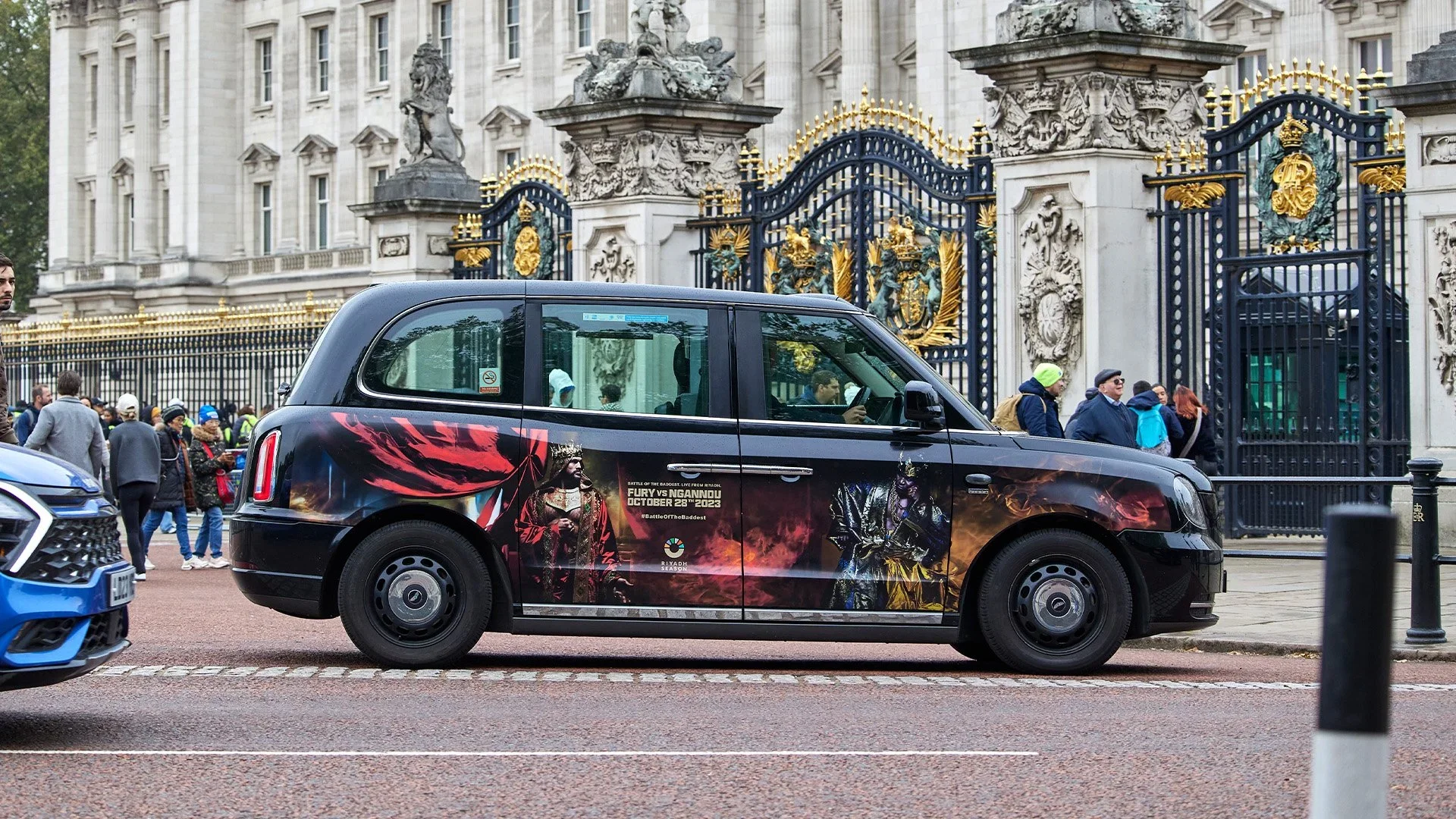
A full wrap covers the entire exterior with brand artwork. It works best for impact across busy cities. The scale and visibility make it popular for brand launches. Full wraps often stay on taxis for long periods, which helps build repeated recognition.
Supersides for a Wide Street Presence
A superside covers the side of the taxi. This is ideal for large artwork, product visuals or bold taglines. It offers strong street level visibility during traffic queues and slow-moving city routes.
Mega Sides for Extended Impact
Mega sides offer a larger, more dominant panel that stretches across most of the taxi’s side. This format gives you extra space for big creative ideas, strong branding and hero images. Mega sides work particularly well in central zones and areas with heavy pedestrian flow.
Tip seats to Capture Passengers
Tip seats place your message directly in front of passengers, encouraging direct action and supporting goals such as
Website visits
App downloads
Promotional codes
Event reminders
Passengers spend an average of 10 to 20 minutes in a taxi, giving tip seat ads a long window to capture their attention and keep them engaged throughout the journey.
Where Taxi Advertising Performs Best
Taxi advertising is strongest in cities with heavy footfall and regular transport flow. London, Manchester, Birmingham, Liverpool, Glasgow, Edinburgh, Bristol and Leeds offer consistent reach. London black taxis are particularly valuable due to their iconic look and constant presence.
Peak zones include
Retail districts
Office hubs
Train stations
Tourist attractions
Airport routes
Brands aiming for business audiences benefit from coverage around Canary Wharf, the City, and major conference venues.
Cost of Running a Taxi Ad Campaign
The price of taxi ad campaigns varies by format, quantity of taxis, city, creative complexity and campaign length. As a guide
Full wraps start at mid four figures per taxi for extended periods.
Supersides are more cost efficient with a strong street presence.
Taxi tips offer a budget friendly entry into taxi advertising and give brands close range exposure to passengers for the entire journey.
Planning Your First Taxi Advertising Campaign
A clear plan helps you make the most of your budget and creative assets.
Identify Your Campaign Goals
Decide what you want the campaign to achieve. Goals may include
Raising awareness for a launch
Building presence in specific postcodes
Driving web visits or app sign-ups
Supporting a wider multi-channel strategy
Choose Your Locations
Look at where your audience lives, works, travels and spends time. Taxi travel rises in high footfall areas during weekends, evenings and key retail periods.
Shape a Simple Creative Concept
Taxi adverts rely on clear visuals. Use
A bold headline
A clean layout
One core message
Easy-to-read branding
Research shows that taxi campaigns with simple layouts increase recall by up to 30 percent. High contrast colours also boost visibility from a distance.
Set the Campaign Duration
Taxi campaigns typically run from one month to a full year. Longer runs help build a steady brand presence while shorter bursts support tactical pushes, product launches or seasonal peaks
Ready to Get Started
Transport Media helps brands plan, book and deliver taxi advertising across the UK. We guide you through format selection, location planning and creative direction to shape a campaign that fits your goals. Our team works with brands of all sizes and manages every stage of the process, ensuring a seamless rollout with clear, measurable results.
If you want guidance or a tailored quote, contact us today.
FAQs
How effective is taxi advertising in UK cities?
Taxi advertising reaches busy areas with high footfall. The constant movement delivers strong daily impressions and high brand recall.
What taxi advertising format works best for awareness?
Full wraps offer the strongest presence due to the scale of coverage. Supersides also work well for bold visuals in central areas.
How long should a taxi campaign run?
Most brands run campaigns for four weeks upwards. Long-term campaigns build recognition while short bursts support timely promotions.
Can taxi advertising target specific areas?
Yes. Routes can be planned around districts such as retail zones, business hubs or nightlife areas for focused reach.
